Humanoid robots come in many shapes and sizes, which makes choosing the right one for your use case both exciting and challenging. As we discussed in our previous article, your use case defines what technical specifications matter most. In this piece, we’ll dive deeper into the key hardware specs—form factor, dimensions, strength, dexterity, mobility, power, robustness, reliability and upgradeability—and explore how they shape a robot’s real-world performance.
- Robot Form Factor
Form factor describes a robot’s shape and overall design. Most people use it to distinguish between full-size humanoids, bipeds, quadrupeds, or wheeled robots, but in engineering, it also includes proportions, component layout, and mobility systems.
Your first decision is whether you need a humanoid or if a biped or quadruped will do.
Humanoids—two legs, two arms, and a head—are built to operate in human environments and handle tasks that require perception, mobility, manipulation and human interaction. They are impressive but complex, expensive, and power-hungry. For those newcomers interested in developing humanoid motion or control algorithms, bipedal robots like LimX TRON 1 will help you ease into the field. Once you’ve mastered the bipedal form factor, you can graduate your algorithms to a full-size model such as LimX Oli.
Quadrupeds—robots with four legs—look more animal-like and are exceptionally stable compared to bipedal humanoids. They shine in rough terrain, inspection, and rescue work, where perception, balance and endurance matter more than dexterity. Boston Dynamics Spot, Unitree Go2, and Deep Robotics X30 are among the most advanced examples, with Chinese models often offering outstanding specs at lower prices.
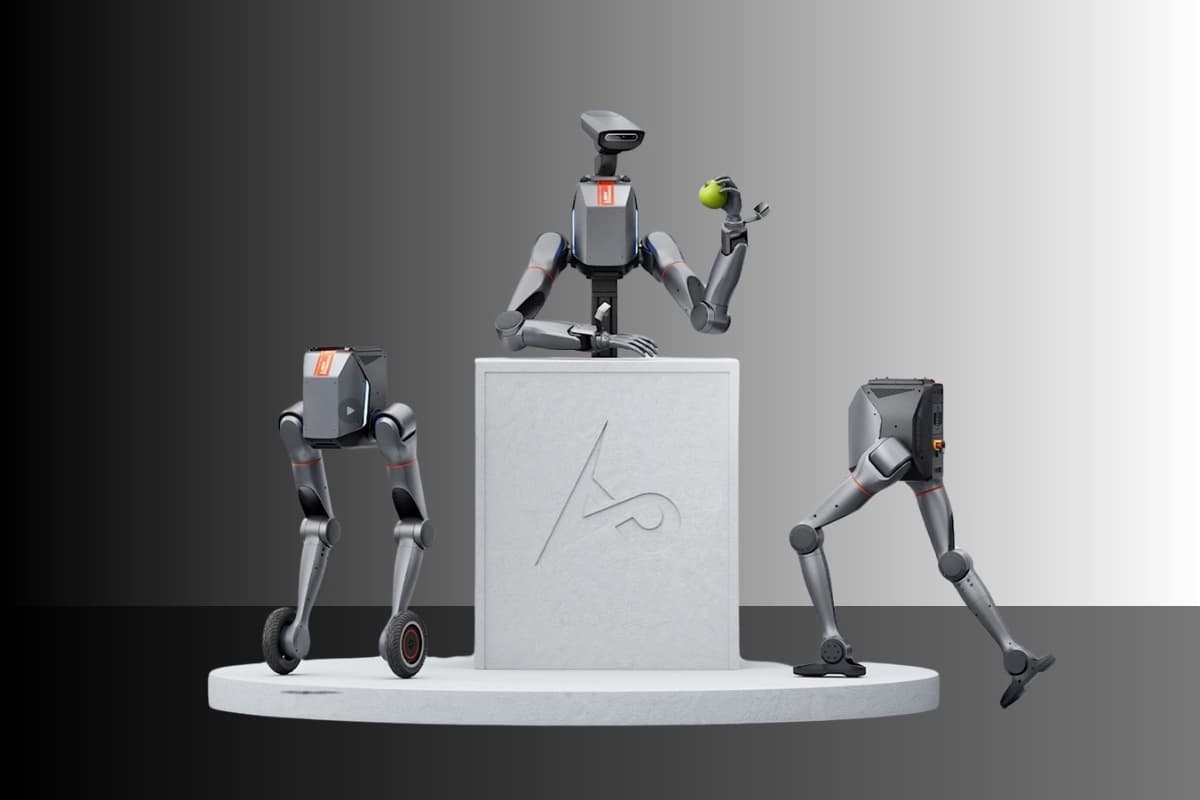
Some robots come as wheeled form factors. LimX TRON 1 can switch from feet to wheels, while Deep Robotics LYNX quadruped runs on wheels and Galaxea R1 can operate on a wheeled base. Wheeled base humanoids excel on flat floors—ideal for a great proportion of the use cases such in logistics, manufacturing, hospitals, and delivery—offering more speed, stability, and power efficiency, though they can’t handle stairs or debris.
Other innovative form factors include aerial drones, ideal for mapping, filming, delivery, and search-and-rescue, etc., and snake-like continuum robots for pipelines or confined spaces. Modular swarm robots go a step further, reassembling into different structures for flexible deployment—though they can be complex to coordinate.
- Robot Dimensions (Height, Weight, Width)
A robot’s dimensions—height, weight, and width—directly affect stability, power use, and how naturally it fits into human spaces.
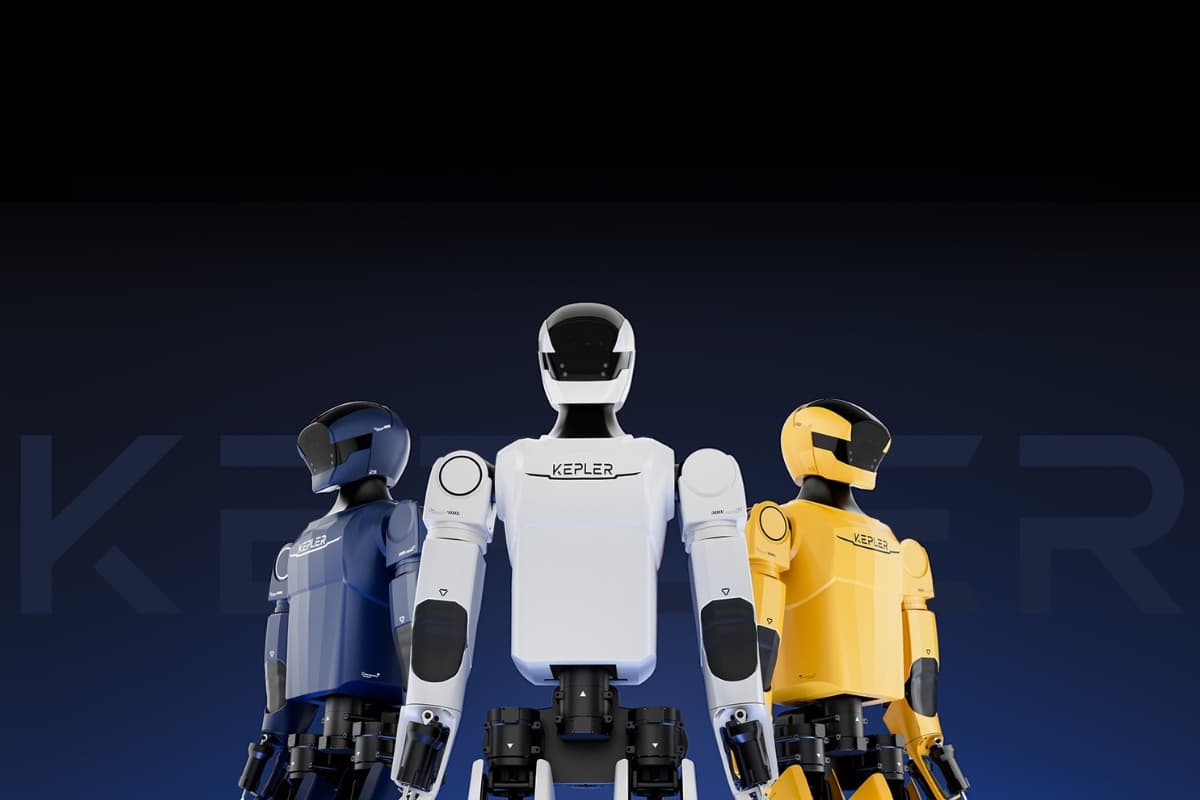
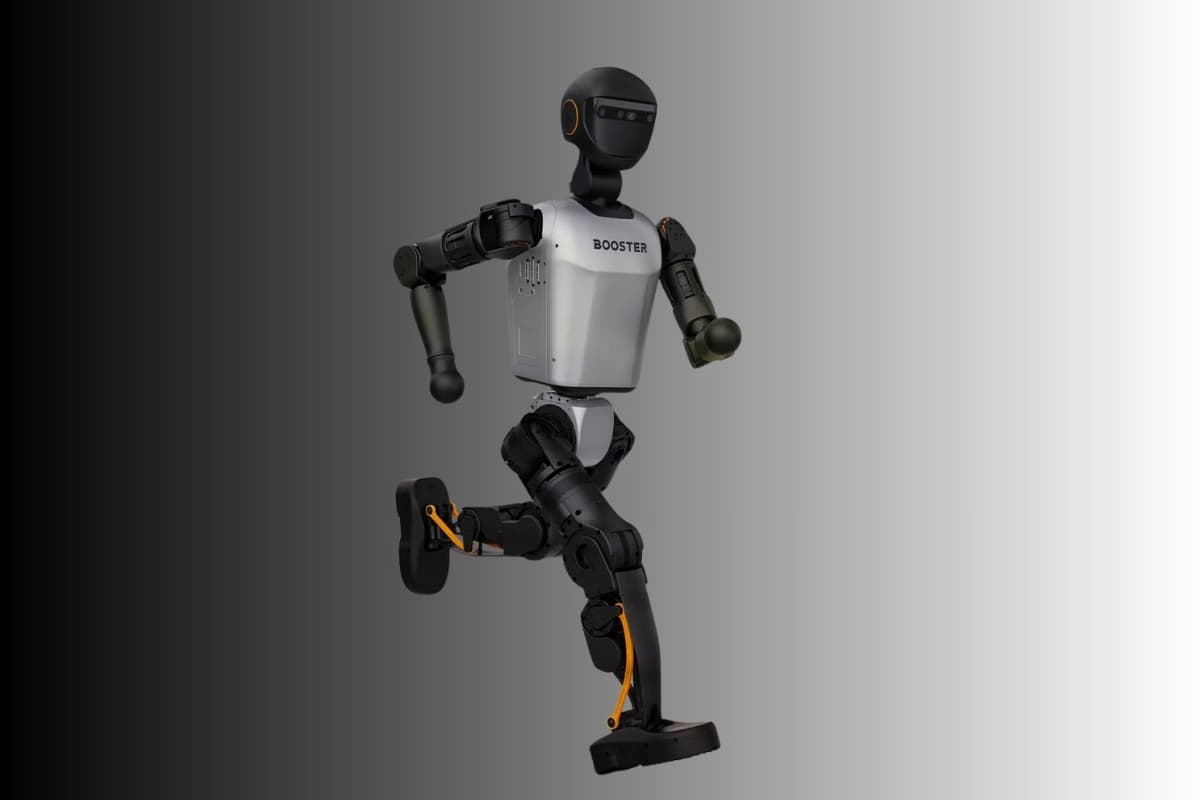
Humanoids closer to adult height (1.5–1.8 m) have better compatibility with human environments (door handles, shelves, tools, work stations, etc.) and human eye-level interaction. Smaller models such as Booster T1 (1.2 m) are perfect for research, while Kepler K2 (1.75 m) targets real-world industrial tasks. A lot of the wheeled humanoids, like Galaxea R1 and Agibot G1 Wheeled Humanoid, adjust height (ranging from, say, 130 cm to 180 cm), which is useful for warehouses or variable-task settings.
Robot weight matters too. Kepler K2 weighs around 75 kg, Booster T1 about 30 kg, and LimX TRON 1 under 20 kg. Heavy robots demand more power and torque and are harder to transport or recover from a fall. Light robots are safer and easier to handle and transport, but can be less powerful.
Humanoid width affects lateral stability. Wider-than-human hips help prevent tipping, whilst shoulders roughly 40–60 cm apart ensure good stability and comfortable navigation through human spaces.
- Robot Mobility and Transportability
Form factor and dimensions shape mobility.
Wheeled robots are generally faster and more energy efficient. For example, LimX TRON 1 can go over 5 m/s on wheels and just under 1 m/s on feet.
Legged robots have the potential to handle uneven ground, climb stairs and perform difficult moves. Sports activities are a great demonstration of a robot’s capabilities, with Booster T1 performing well across all robot football tournaments, while various models such as Unitree G1 demonstrating advanced mobility skills in gymnastics and kungfu. Nevertheless, there are also a few wheeled bots (LimX TRON 1, Deep Robotics LYNX) that perform incredibly well in all-terrain conditions.
Transportability also matters. Moving robots between labs or sites means accounting for packaging and travel weight. Smaller bots like Unitree Go2 (15 kg), TRON 1 (< 20 kg), and Booster T1 (~ 30 kg) are among the lightest and easiest to ship or hand-carry across locations and borders.
- Robot Strength
A robot’s strength determines how much practical work it can do. Two metrics matter the most: torque and payload.
A robot’s torque, measured in Newton-metres (N·m), indicates how much rotational force each joint can generate—essentially, the robot’s “muscle.”
A robot’s payload (in kg or lb) measures how much weight the robot can lift or carry safely, combining its torque, balance, and structural design. Some tasks require total payload (carrying heavy boxes), while others depend on arm payload (operating drills, polishing surfaces, or pouring liquids).
Among EnduX-distributed robots, Kepler K2 stands out with 220 N·m peak torque, 20 kg grip force, and 30 kg total payload—an impressive industrial performer that rivals Tesla’s Optimus. It’s also energy-efficient, offering up to 8 hours of operation on a single charge.
- Robot Dexterity and Manipulation
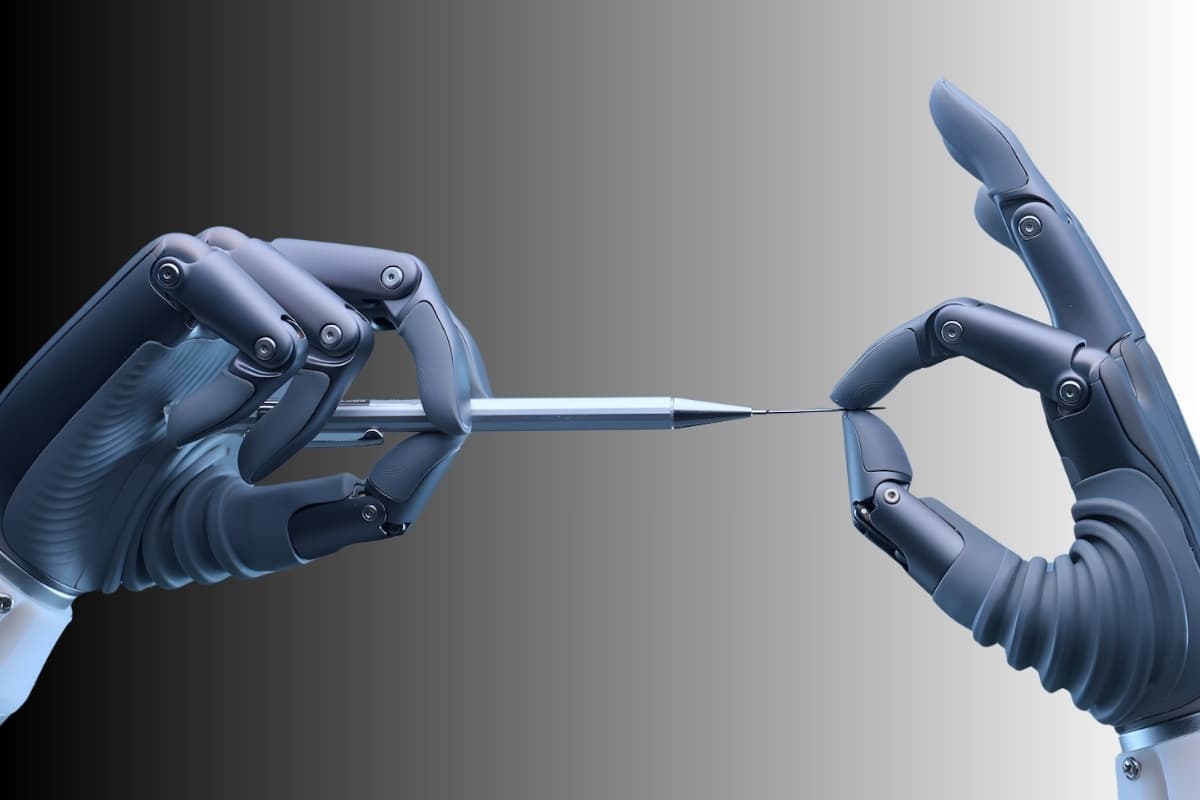
If strength lets a robot move things, its dexterity lets it do things. Dexterity reflects how precisely a robot can use its hands or grippers—balancing fine motor control, pressure sensitivity, joint coordination, adaptability, and reaction speed. It is a blend of strength and intelligence, enabling robots to thrive in less structured, human environments.
Degrees of Freedom (DoF) is the most common quantitative measure of a robot’s dexterity - each independently moving joint adds one DoF. A human hand has over 27 DoF, while most humanoid hands range from 10 to 20. However, DoF alone isn’t enough; true dexterity depends on control algorithms and feedback precision. Higher DoF means more flexibility but also adds programming complexity.
Among today’s most dexterous humanoid and wheeled humanoid robots are LimX Oli (31 DoF) and Galaxea R1 (26 DoF), the latter powering Physical Intelligence’s π-0.5 model. Their control systems balance agility, sensory precision, and coordinated motion—hallmarks of next-generation manipulation.
- Power Requirements and Battery Life
Even the strongest and most dexterous robot becomes useless if it runs out of charge mid-task. Power efficiency and battery design are crucial to autonomy, cost, and safety.
When comparing humanoid robot specifications, look closely at battery type, capacity, and recharging options. Very few robots have the stamina of Kepler K2 and must be plugged in every few hours, increasing downtime and supervision needs. Some, like TRON 1, allow quick battery swaps with spare packs. Others use inductive charging, convenient but slower, while select advanced models support self-docking stations for automated recharge cycles. It is worth mentioning that batteries can be quite heavy and, depending on their capacity, can pose additional cross-border logistics challenges in some countries, due to shipping and customs requirements.
Power systems define practicality: longer runtime, safer operation, and fewer interruptions translate directly into productivity and lower maintenance. Efficient designs minimise losses to heat and friction, perform more work per charge, and maintain cooler operation.
- Robot Robustness
Robot robustness reflects a machine’s ability to remain operational in various environments. The key specs to consider are Ingress Protection (IP) rating, thermal and humidity tolerance and shock and vibration tests.
Indoor vs. outdoor use cases require very different robustness specs. Lab machines need IP ratings of IP40 to IP55, whilst heavy duty outdoor industrial robots need IP ratings of IP65 to IP69K. Similarly, machines that operate in hash external environments need to have higher thermal and humidity tolerance and operational range. For example, Deep Robotics X30, a quadruped commonly used for inspection and patrolling in industrial settings, has IP67 rating and can operate in temperature ranges of -20 to +60 degrees Celsius. Last but not least, if a robot is likely to experience a lot of tumbles and falls (think rough terrain search and rescue, R&D tests, etc.), it needs to demonstrate excellent performance on a wide range of vibrations and shock tests. Booster T1, for example, is an R&D robot famous for its exceptional robustness.
- Robot Reliability
Robot reliability becomes another critical purchasing factor in more commercial contexts where ROI matters. A couple of key hardware reliability performance measures to consider are mean time between failures (MTBF) and field failure rate (FFR).
MTBF measures the average operational time (in hours) a robot runs before a non-recoverable failure that requires human repair or part replacement. For humanoids, a MTBF of 2,000–5,000 hours (3 to 6 months of continuous runtime before a major fault) is considered decent field reliability.
FFR is the percentage of deployed robots that experience a failure per defined time period (usually per 100 or 1,000 operating hours). Field failure rate <2% indicates production-ready hardware and robust control systems.
- Robot Hardware Upgrades, Add-Ons and Spare Parts
As robotics evolves, the best platforms are designed for upgrades and modularity. This is especially true for research and development robots like LimX TRON 1 and Unitree Go2, which feature modular joints, replaceable sensors, and expansion ports. TRON 1 not only offers interchangeable 3-in-1 feet (point, flat, wheeled) but also supports arm, voice, and sensor modules—and algorithms built for it can be transferred and modified to its full-size sibling Oli.
Commercial and industrial models increasingly use swappable sub-assemblies such as arms, hands, or sensor units, making maintenance faster and extending product life. Modular systems let companies adapt one base robot to multiple roles—by changing grippers, cameras, or processors—without buying entirely new hardware.
Because the industry is young, some manufacturers even collaborate on custom builds for specific applications. While these are more expensive, they often accelerate innovation and proof-of-concept development. EnduX helps organisations identify suitable reputable partners and codevelop bespoke solutions with manufacturers and clients to explore various use cases.
- Robot Price
The price of a robot is directly influenced by the technical specs. Generally, bigger, stronger and more dextrous robots (higher DoF, more tactical sensors, etc.) also cost more. For example, a full-size Unitree H1 is more expensive than a 1.2m Unitree G1 model. Development enabled (EDU) models are also more expensive than their basic versions (i.e. LimX TRON 1 EDU vs. TRON 1), and robots meant for industrial uses (Kepler K1, Unitree B2), always cost more than research robots (LimX Oli, Unitree Go2). When evaluating the technical specs you need, it is worthwhile remembering how they impact the end price and, by extension, the ROI you will get at the end of the day.
Conclusion
Choosing the right humanoid robot means balancing form factor, dimensions, strength, dexterity, mobility, power system, robustness, reliability and modular design, as well as price, around your specific use case. Whether you’re developing AI motion algorithms, testing industrial automation, or exploring human-robot interaction, understanding these core specifications helps ensure the robot you choose meets both today’s requirements and tomorrow’s opportunities. It is worth noting that international customers purchasing robots manufactured in China often benefit from buying from local distributors, such as EnduX, who can offer pre- and after-sales service and communicate with manufacturers regarding spare parts, hardware upgrades and add ons.
If you’d like to discuss any of these specifications in more depth, explore which models best fit your goals or discuss pricing, book time with EnduX. We’re happy to guide you through the pros, cons, and evolving capabilities of the humanoid robotics market.