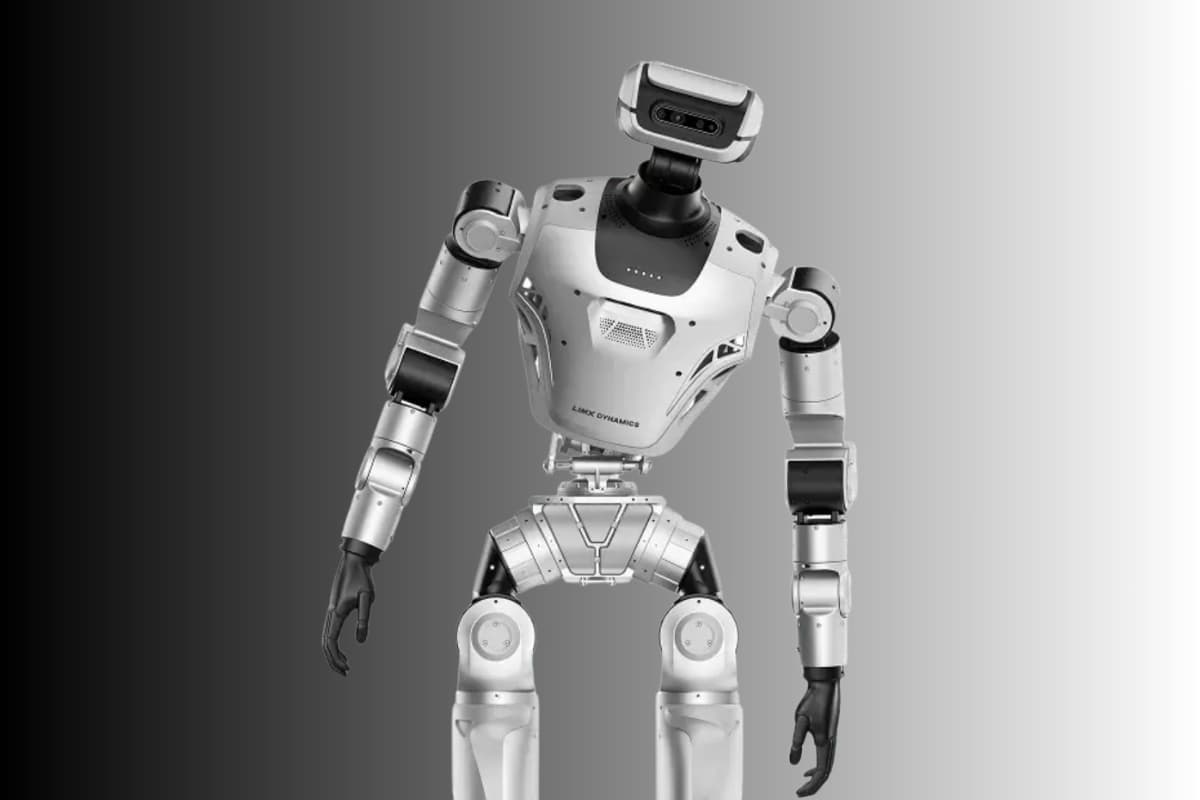
One of the most common questions we get asked this year is:
"What can humanoid robots actually do today?"
It's a fair question. As a matter of fact, the question is so popular that when our CEO, Aska Liu, gave a talk on the subject at Hannover Messe in April 2026, the stage ran out of both seats and headphones for the gathered crowd.
If you follow the headlines, it can feel as though humanoids are about to transform every industry overnight. However, the reality is both more exciting and more practical.
In our experience, there are four key areas where humanoid technology works in practice today.
Research and Education: The Most Mature Humanoid Robot Market
Research remains the most mature part of the humanoid market.
A year ago, the main users of humanoids were mostly universities and research institutes. This year however, industrial innovation teams at different companies are beginning to invest more heavily in the technology. We are seeing companies use humanoids to explore everything - from fancy performances and manipulation to human-robot interaction.
New models at more affordable prices are making robotics accessible to educational institutions beyond research labs. Progressive secondary schools are starting to invest in robots to help students gain an early exposure and edge in the advanced research and workplace of tomorrow. For example, after years of seeing the International Robot World Cup gain popularity among universities all over the world, similar leagues for high schools have emerged in Beijing this year with support from the local education bureau.
What is particularly interesting is how quickly the conversation is shifting to "How do we make robots useful?" That feels like an important turning point for the industry.
Humanoid Robots for Events, Marketing and Customer Engagement
This is probably the fastest-moving commercial use case we see today.
The reason is simple: humanoid robots attract attention.
Whether at exhibitions, conferences, retail activations, or corporate events, humanoids create curiosity and engagement in a way few other technologies can. Robots draw crowds everywhere they appear - United Nations meetings, industrial fairs such as Hannover Messe and even Fashion Connect in Cannes. Notably, many conversations that start with a marketing demonstration end with a discussion about business applications and value generation.
Humanoid Robots in Hospitality and Visitor Experiences
Another area gaining momentum is customer-facing interaction.
Modern humanoids are increasingly capable of greeting visitors, answering questions, guiding tours, and supporting showroom experiences.
The robots are not replacing human hospitality teams. Rather, they are creating new ways to engage visitors and deliver memorable experiences. Emerging research in this space suggests that for some people, interacting with robots is a more pleasant and less stressful experience than interacting with other humans. The latter creates interesting possibilities for differentiation and exciting customer experiences for museums, exhibitions, visitor attractions, company showrooms and experience centres.
Industrial Humanoid Robots for Inspection, Logistics and Material Handling
This is where things get particularly interesting.
Industrial organisations are increasingly exploring how humanoids can support inspection, material handling, and warehouse operations.
The opportunity is obvious. Many industrial environments contain repetitive tasks that combine movement, visual recognition, and simple manipulation - the core capabilities of today’s humanoid robots. In addition, tasks carried out in hazardous environments, outside normal working hours, or requiring long periods of physically demanding work are becoming increasingly difficult to staff, particularly in Europe. As labour shortages continue to grow, companies show strong incentives to explore humanoid robots as a practical solution.
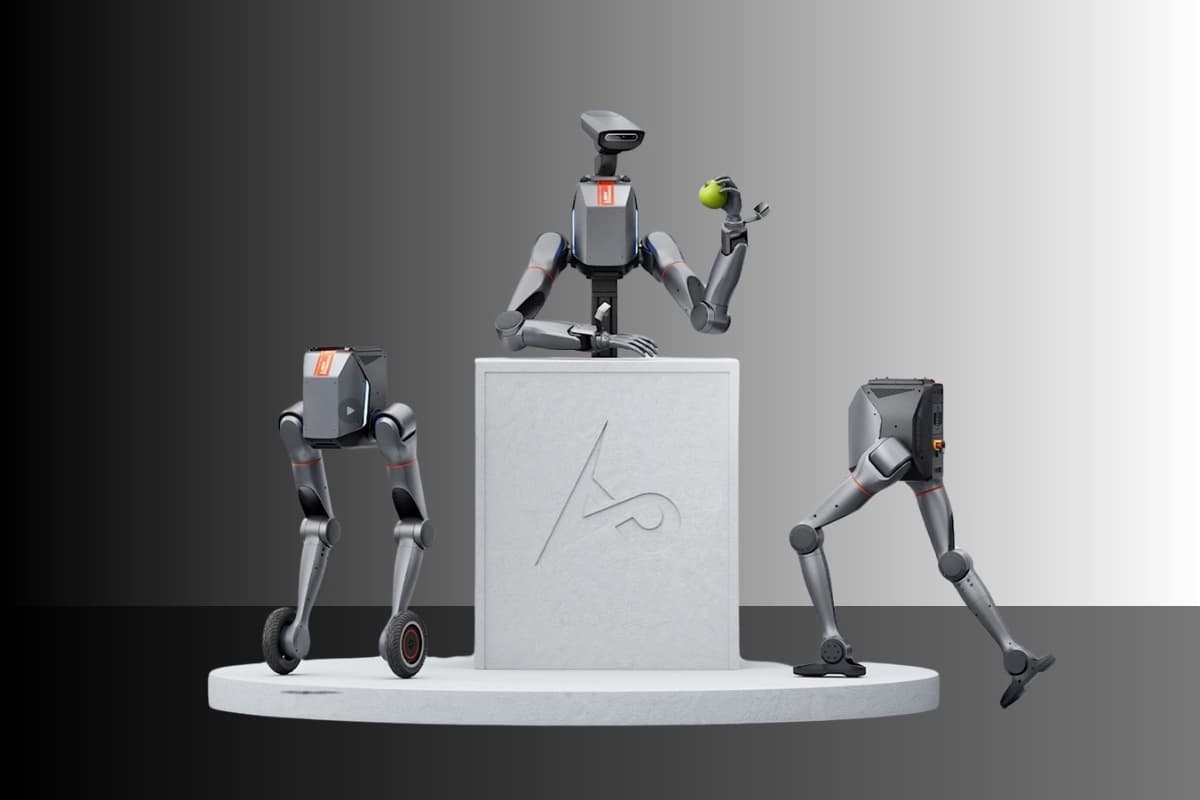
The best deployments usually focus on specific, well-defined tasks that are achievable with current technology, rather than attempting to replace human workers across an entire workflow. For example, Longcheer has deployed multiple Agibot G2 wheeled humanoid robots on its tablet production line to perform the automated inspection task, enabling continuous operation with minimal human intervention. Read our article on What to Consider Before Buying a Humanoid Robot for further information on how to approach the technology.
What Humanoids Still Can't Do
For all the progress, there are still limits.
Generalisation, autonomy, dexterity, efficiency, and cost remain challenges. A robot performing perfectly in a controlled demonstration is very different from a robot operating consistently in an unstructured, dynamic environment, such as a busy hospital corridor or a large outdoor facility. In many cases, humanoids today cannot reach the same levels of productivity, adaptability and intelligence as human workers. However, this does not prevent them from delivering real value in targeted applications where labour shortages have become a challenge. This is why we often encourage organisations to spend more time identifying practical use cases and asking questions. Much of the success or failure of the deployment can depend on selection and clear definition of the task, along with the company’s working environment, level of commitment and resources available to invest in learning how to best deploy the technology.
The Bigger Opportunity
Humanoid robotics is advancing incredibly quickly. But despite all the excitement around the technology, the organisations seeing the greatest success are not focusing on robots. They are focusing on outcomes.
The future of humanoids will not be defined by the robots that can dance the best or move the fastest. It will be defined by the organisations that find practical ways to use them to solve real problems.
That shift is already happening. And it is far more interesting than the hype.
If you believe you have a problem that humanoids can solve, get in touch and we can help take your thinking to the next level.
FAQs:
What can humanoid robots do today?
Humanoid robots are already being used in research, education, industrial inspection, logistics, hospitality and customer engagement.
Which industries use humanoid robots?
Manufacturing, logistics, research, education, retail, hospitality, events and visitor attractions are among the earliest adopters.
Can humanoid robots replace human workers?
Today's humanoid robots are best suited to repetitive, well-defined tasks. They complement human workers rather than replacing them in most environments.
Are humanoid robots commercially available?
Yes. Several manufacturers now offer commercial humanoid robots for research, industrial and customer-facing applications.
Can you rent a humanoid robot?
Yes. Humanoid robots can be rented for events, research projects, demonstrations and technology evaluations. You can read our article on the benefits of Robot-as-a-Service for more information and check out EnduX Rent a Robot page for active rental options.